Flu Vaccines PLUS Welcome, Dr. Oesterle!
Flu vaccines (injectable and nasal) and COVID Vaccines are here for all patients. See the "Services" page for details.
Also, We are excited to welcome Dr. Colette Oesterle, who will be joining us at the end of September. Learn more about her on the "Our Practice" page.
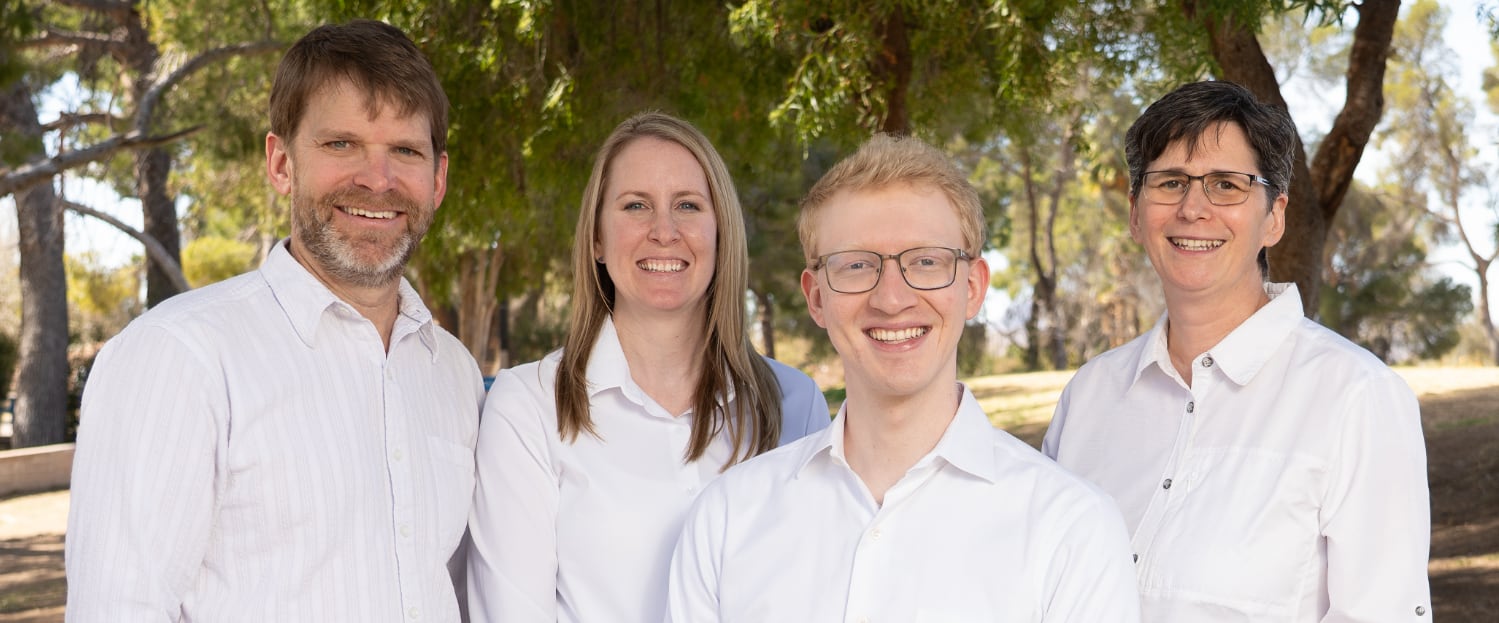
Dr. Jeff Couchman, Dr. Nicole Abdy, Dr. Joshua Yell, and Dr. Catherine Gioannetti
Mesquite Pediatrics provides high-quality, personalized care for infants, children, teens, and young adults in Tucson AZ.
Resources You Can Trust
We do our best to provide you with reliable online resources to guide you in caring for your child. Our Patient Education Library contains over 800 handouts with expert advice from the American Academy of Pediatrics.
News & Blog
Governor Hobbs signs executive order expanding access to COVID vaccines
news • September 12, 2025
Governor Hobbs has signed an executive order expending access to COVID vaccines in Arizona. Read our news article or see our Pediatric Services page for more details and to learn how to schedule.

2025 Tucson Lifestyle Regional Top Doctors
news • April 29, 2025
Mesquite Pediatrics is proud to acknowledge Dr Jeff Couchman, Dr Nicole Abdy, and Dr Catherine Gioannetti as Tucson Lifestyle Regional Top Doctors for 2025. See their accomplishment on pages 86 and 110 of the April issue of Tucson Lifestyle.
It’s RSV Immunization Season Again
blog • October 1, 2026
We are entering RSV season again, so that means it’s the time of year for babies to get their RSV immunizations. All babies born from May to September this year are now recommended to get this very important injection to help prevent RSV, which is the most common cause of hospitalization and death in the first year of life outside the newborn period. We recommend bringing your baby in for...
As we have entered the new year let us focus on how to keep our children healthy
blog • January 7, 2026
As we have entered the new year let us focus on how to keep our children healthy. We know a healthy diet is important to their well-being and that it should contain more whole foods than processed foods. We know physical activity helps maintain healthy weight and prevent complications like diabetes and heart disease. We know vaccinations prevent harmful and potentially fatal infections. The falsified links of acetaminophen (Tylenol) and...
Mesquite Pediatrics on Facebook
With Halloween around the corner we asked Mesquite Pediatrics team what is their favorite candy.
6 hours ago

Thank you once again Mesquite Pediatrics families for a success drive thru! We had a blast in our Mario Kart costumes, giving out prizes, and seeing some cars "spin out" on the banana peels.
1 day ago
The University of Minnesota's Center for Infectious Disease Research and Policy and Unbiased Science have created an online tool called "What's the Risk?". It visually compares the risks of vaccines with those of the diseases they prevent. The tool aims to make complex statistics more understandable for the general public.
Check it out:
www.unbiasedscience.org/risk-comparison
3 days ago
The 4th trimester is the 12 weeks after delivery when babies are adjusting to life outside the womb and parents are adjusting as well.
Here is a helpful article from Healthychildren that helps parents navigate this sometimes challenging time:
www.healthychildren.org/English/ages-stages/baby/Pages/The-4th-Trimester-Navigating-Your-First-Fe...
6 days ago
Learn more about RSV vaccination. RSV immunization can now be scheduled on the portal for infants <8 months if mom did not receive during pregnancy or was <2 weeks before delivery.
1 week ago
Check out this podcast on setting curfews and raising responsible teens at:
www.healthychildren.org/English/tips-tools/healthy-children-podcast/Pages/ep088-why-curfews-matte...
1 week ago